
Search
Many plastic components may not look complicated, but once they are put into actual product use, they often have high requirements for dimensional accuracy and structural stability. A decorative strip, guide rail, sealing strip, channel profile, or protective strip may be nothing more than a continuous cross-section, yet it must maintain a stable shape along its entire length. If any dimension deviates, it may affect assembly, sealing, sliding, or even the overall performance of the product.
This is also why custom plastic extrusion profiles need to be designed based on application requirements. Instead of forcing a product to fit an existing standard profile, it is better to determine the profile cross-section according to the actual installation method, load conditions, and operating environment. Details such as wall thickness, internal cavities, snap-fit structures, reinforcing ribs, grooves, and radii may all affect the final profile performance, while also influencing melt flow, cooling, and dimensional stability during the extrusion process.
For OEM buyers, the real focus should not be simply whether there is a profile with a similar shape, but whether the material, cross-sectional structure, mold, and production process can form a stable manufacturing solution that continuously meets the functional requirements of the final product.
A plastic extrusion profile is a plastic product with a continuous cross-section formed by the plastic extrusion process. In this process, heated polymer melt is continuously passed through an extrusion die with a specific cross-sectional shape, then calibrated, cooled, and pulled to form the final product. Unlike injection molding, which is generally used to produce individual parts, extrusion is more suitable for manufacturing products whose cross-sectional shape remains basically consistent along the length direction.
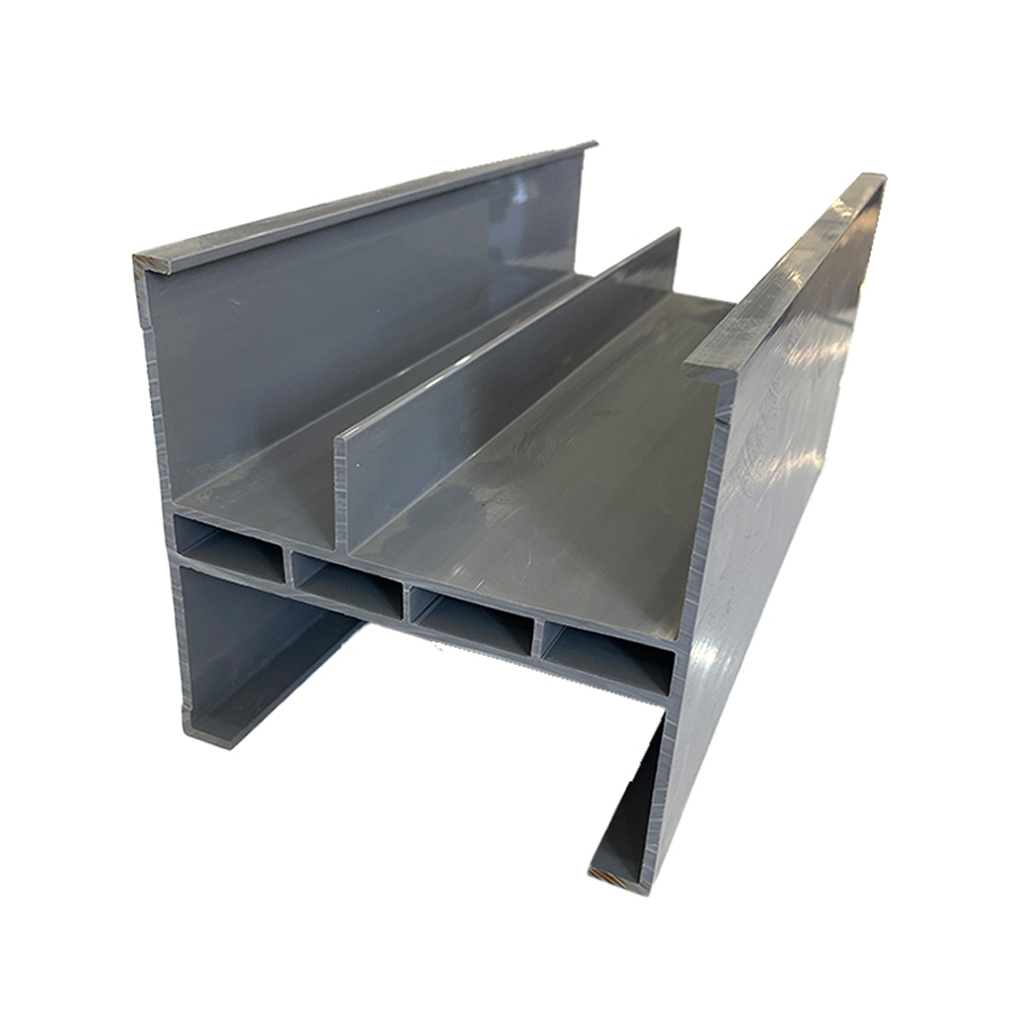
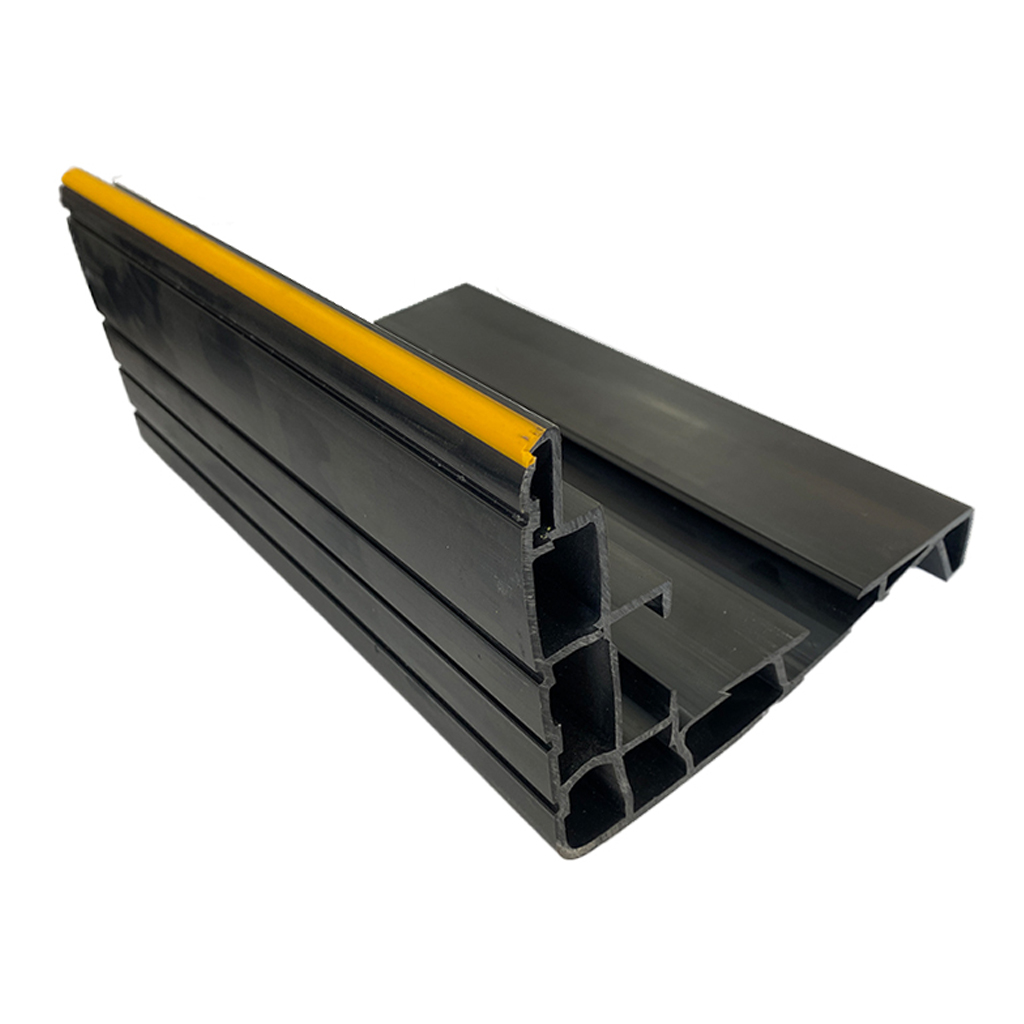
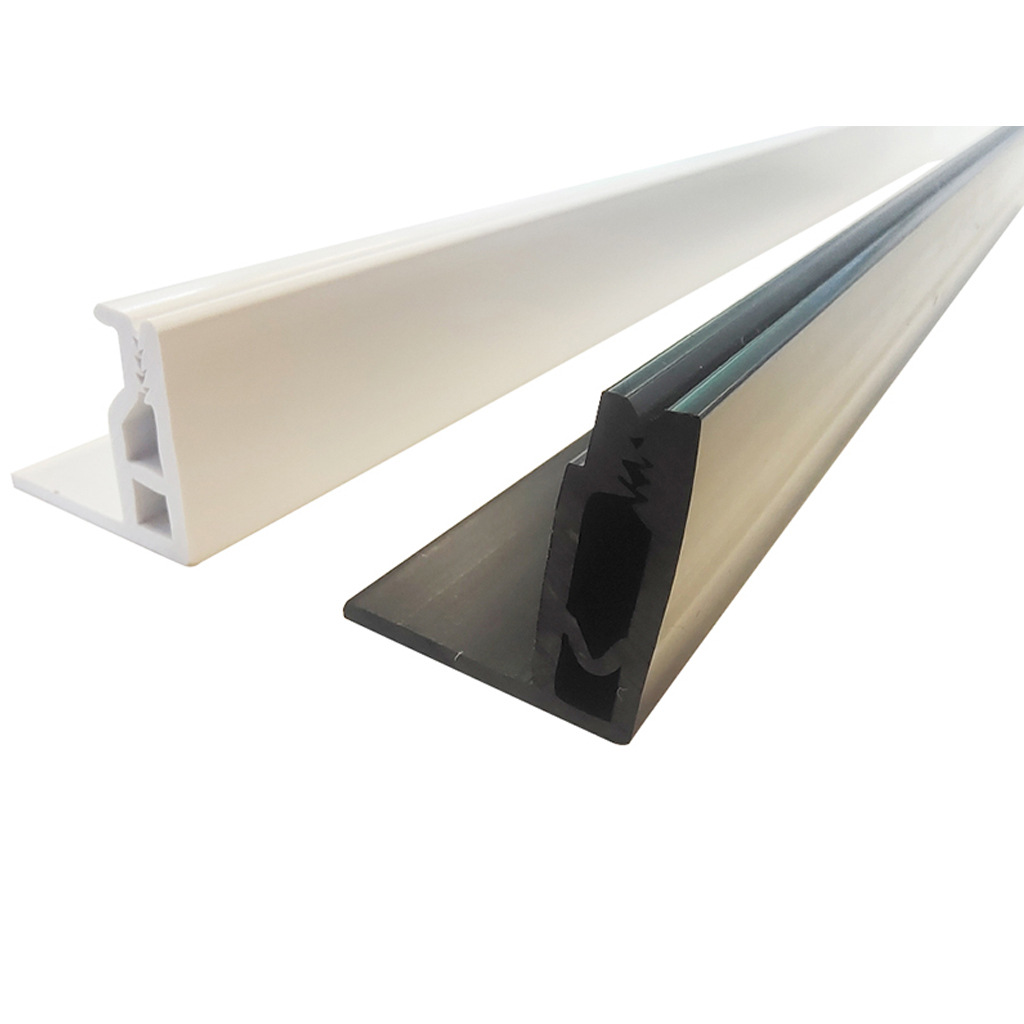
Therefore, plastic extrusion profiles can be used for edge trims, sealing strips, guide rails, channel profiles, protective strips, cover plates, and various structural connectors. Depending on the subsequent application, products can be supplied in continuous lengths or cut to specified lengths.
Among these factors, “customization” is very important in OEM projects. Even if a standard profile looks very close to the target product, slight differences in slot position, wall thickness, installation dimensions, or connection structure may prevent it from truly meeting assembly requirements. Custom plastic extrusion profiles are developed around the specific product dimensions, installation method, and functional requirements, allowing the profile itself to integrate better into the final product.
For example, if the profile needs to snap together with other components, the positions of the snap features and slots must be accurately controlled. If the profile serves a sealing function, the sealing lip and compression area must be carefully considered. If the profile is used to protect product edges, structural strength, flexibility, and appearance must all be taken into account.

A qualified extrusion profile should first solve a real application problem, rather than simply pursue an attractive cross-sectional shape. Before designing a profile, it is necessary to clarify how it will be installed, which components it will work with, and what loads it will bear during use.
For example, when a profile is used as a guide rail, its sliding contact surface may require high dimensional stability. When used as a seal, more attention should be paid to the elasticity and compression state of the sealing lip. When used for edge protection, the profile must have sufficient wrapping capability and be able to withstand impacts during daily handling and use.
The structure of the profile cross-section also directly affects extrusion stability. Wall thickness, internal cavities, reinforcing ribs, and cross-sectional changes all influence how the material flows inside the die and how quickly it cools after leaving the die. If different areas of the cross-section cool at significantly different rates, the profile may deform, shrink unevenly, or experience dimensional fluctuations.
Therefore, whether a cross-section is suitable for extrusion cannot be judged only by the visual appearance of a CAD drawing. A structure that looks very reasonable in a 3D model may be difficult to manufacture consistently in actual production due to overly thin walls, complex local features, or uneven cooling. Conducting an engineering review in advance can help identify these potential issues before mold development.
Material selection should be based on the actual operating environment, rather than determined solely by the shape of the profile. PVC and ABS are both common thermoplastic materials, but they each have different characteristics in terms of flexibility, rigidity, toughness, and appearance.
| Material | Main Characteristics | Typical Application Considerations |
|---|---|---|
| PVC (Polyvinyl Chloride) | Good processing performance, available in rigid and flexible formulations, with strong design adaptability | Suitable for decorative strips, sealing strips, guide rails, cover plates, and profiles requiring flexibility, weather resistance, or cost-effective processing |
| ABS (Acrylonitrile Butadiene Styrene) | Good toughness, rigidity, and surface appearance | Suitable for profiles with higher requirements for impact resistance, dimensional stability, and appearance |
| Other Thermoplastics | Specific performance depends on resin type and formulation | Suitable for applications with special requirements for temperature resistance, chemical resistance, electrical properties, or mechanical performance |
PVC is widely used for extrusion profiles because different formulations can provide varying degrees of rigidity and flexibility. As a result, suitable PVC systems can be selected according to application needs, ranging from relatively rigid decorative profiles to sealing and protective profiles with a certain level of flexibility.
ABS is generally used in applications with higher requirements for toughness, rigidity, and surface quality. For exposed profiles or components that are frequently touched or handled, ABS may offer certain advantages.
If the product needs to withstand higher temperatures, specific chemical media, or has special requirements for electrical insulation and mechanical performance, other thermoplastic materials can be further evaluated. In other words, material selection should be based on actual working conditions, rather than choosing a resin simply because it is “easier to process.”
For OEM projects, material cost should not be the only criterion. Processing stability, service life, dimensional requirements, and compatibility with other components may have a greater impact on the overall project cost.
Custom plastic extrusion profiles usually start with detailed cross-sectional drawings. The drawings should not only show the overall dimensions of the profile, but also clearly indicate wall thickness, cavities, grooves, reinforcing ribs, installation areas, and key dimensions that interface with other components.
Material requirements also need to be confirmed at this stage. Different plastics behave differently during extrusion. Therefore, when the same cross-section is produced with different materials, the same die design and process parameters may not necessarily be directly applicable. Material selection and die design are actually two interconnected steps.
After the profile structure and material are determined, the project enters the extrusion die development stage. Once the die is completed, sample production is usually required to verify the actual cross-section, and the samples are compared with the engineering drawings. If key dimensions fall outside the required range, the die structure or production parameters may need to be adjusted. Stable production can begin only after the samples are confirmed to meet the requirements.
For OEM projects requiring non-standard cross-sections, special dimensions, or specific material combinations, Ruizhan provides custom plastic extrusion profile products and solutions. Understanding available profile development and production capabilities in the early stage of a project helps determine whether the design is suitable for the extrusion process and can reduce the risk of later mold modifications.
Whether profile dimensions remain stable is not only a matter of die precision. Material shrinkage, cooling conditions, extrusion speed, and other variables in the production process may all affect final dimensions.
Therefore, OEM engineering drawings should clearly distinguish between critical dimensions and general dimensions. For example, the size of a groove that needs to snap together with other components may directly determine whether assembly succeeds, so it must be carefully controlled. Some appearance dimensions that do not affect assembly may have relatively looser tolerance requirements.
This approach of defining dimensional requirements based on function also makes quality inspection more reasonable. Instead of applying the same strict inspection standards to all dimensions, it is better to focus more effort on the critical areas that truly affect assembly, sealing, sliding, or fastening performance.
Profile length tolerance should also be determined according to the actual application. Some products are supplied in continuous lengths and cut at the customer’s site, while others must be pre-cut to fixed lengths. Cutting method, subsequent assembly process, and the flexibility of the profile itself should all be considered when defining length requirements.
For long-term OEM projects, batch-to-batch consistency is especially important. The fact that the first batch of samples meets requirements does not mean that later production will necessarily maintain the same dimensions and appearance. Therefore, stable process control and a reasonable inspection plan are important foundations for ensuring long-term supply quality.
For exposed profiles, color, gloss, texture, and surface uniformity are all part of the product specification, not decorative details to be considered only after production is complete.
If the profile needs to match other plastic parts, panels, or decorative surfaces, it is best to determine the color standard early in the project. Digital images can be used for preliminary communication, but due to the influence of monitors, shooting environments, and light sources, colors shown on a screen cannot fully represent the actual material. Therefore, for projects with high appearance requirements, physical samples are usually more suitable as the final confirmation basis.
Surface treatment should also be considered together with the actual application. Some profiles require a smooth surface for easy cleaning, while others need a specific texture to match surrounding materials. For highly visible custom plastic extrusion profiles, it is recommended to confirm both dimensional samples and appearance samples before mass production, which can reduce misunderstandings in subsequent production.
A complete inquiry package allows the supplier to more accurately assess mold, material, and production requirements. The most important document is usually a detailed 2D cross-sectional drawing, especially when the profile includes snap features, grooves, cavities, or other functional structures.
If available, a 3D model can also be provided to explain the profile’s installation position and assembly relationship within the complete product. However, for extrusion production, the 2D cross-sectional drawing remains the most essential technical document.
Material requirements should also be specified as clearly as possible, including designated resin, hardness, or other performance requirements. Requirements for color, surface treatment, transparency, and other appearance-related factors should also be stated in advance if they affect the final product appearance.
In addition, key dimensions, tolerances, cut-to-length requirements, application environment, and estimated purchase quantity should be provided. If the profile needs to work with other components, it is best to explain the actual assembly relationship rather than simply providing a dimension. This allows the supplier to understand why the dimension is important and to develop a more reasonable production solution accordingly.
If the project involves a special cross-section, tight tolerances, or a specific material combination, you can contact Ruizhan to discuss your custom plastic extrusion profile project. Clarifying drawings, materials, and actual application conditions before mold development helps identify potential issues early and reduce repeated modifications later.
A truly suitable custom plastic extrusion profile is not simply about producing a complex cross-section. It requires profile design, material performance, die structure, and production process to work together in service of the final product.
PVC (polyvinyl chloride) is suitable for many applications requiring good processing adaptability, flexibility, and appearance. ABS (acrylonitrile butadiene styrene) can be used in applications that place greater emphasis on toughness, rigidity, and dimensional stability. If the product faces special temperature conditions, chemical media, or mechanical performance requirements, other thermoplastic materials can also be further evaluated.
For OEM buyers, the most effective development approach is to start from product function, define the cross-sectional structure, material, critical tolerances, and operating environment in advance, and then verify through samples whether the design is truly suitable for mass production. Clear drawings, reasonable tolerances, and early technical communication not only help reduce mold modifications, but also improve consistency in long-term production.
A custom plastic extrusion profile is a continuous plastic profile developed according to the specific cross-sectional shape, dimensions, material, and functional requirements of a product. It is mainly used in applications where standard profiles cannot meet specific assembly requirements.
Yes. PVC (polyvinyl chloride) can provide different levels of rigidity and flexibility through different formulations, so it is widely used in decorative strips, sealing strips, guide rails, cover plates, protective profiles, and other products.
PVC generally offers good flexibility and processing adaptability, while ABS is stronger in toughness, rigidity, and dimensional stability. The specific material should be determined according to the profile’s operating environment and performance requirements.
A 2D cross-sectional drawing is the most important document. It should indicate overall dimensions, wall thickness, key interfaces, and tolerances. A 3D model can further help the supplier understand how the profile is installed within the overall product.
Actual extrusion results are affected by materials, dies, cooling, production parameters, and other factors. Sample verification can confirm dimensions, appearance, and assembly performance in advance, reducing the risk of problems after mass production.
It is recommended to provide cross-sectional drawings, material, color, surface treatment, key dimensions and tolerances, cut-to-length requirements, application environment, assembly requirements, and estimated purchase quantity. The more complete the information, the easier it is for the supplier to accurately evaluate the project.