
Search
A fabric wall can look straightforward on a drawing, yet the visible result is decided at the perimeter, joints, corners and access openings. The track profile, fabric, substrate and installation method must be evaluated together. A small wall mock-up is an efficient way for designers, installers and purchasing teams to establish what the finished assembly should look like before the complete project is fitted.
When selecting an acoustic fabric stretch track, review where it will be fixed, how the chosen fabric is retained and how the edge will be finished. The same profile can behave differently on another substrate or with a different fabric backing. A statement such as “strong grip” is less useful than a successful mock-up with the intended materials.
The product drawing and proposed detail should show the actual edge condition, not just an isolated profile cross-section. Include any supporting board, acoustic backing or access component required by the project, with dimensions verified by the responsible technical team.
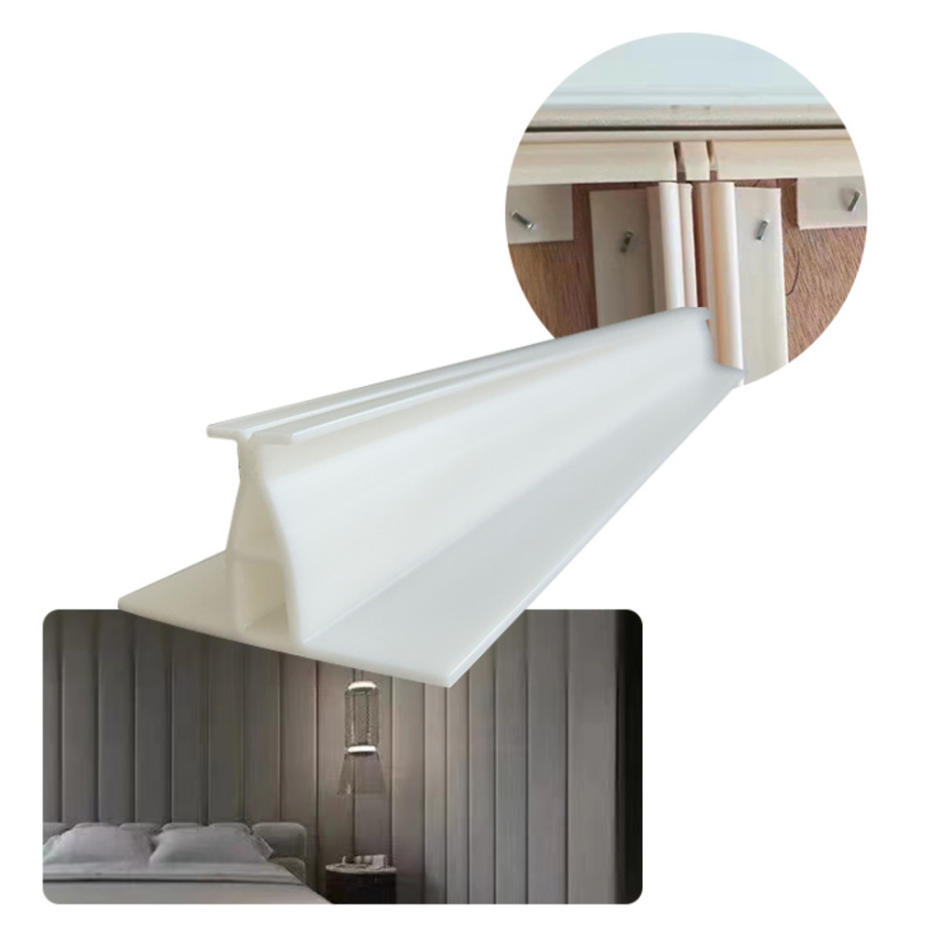
Select an area that reproduces the most demanding details instead of the simplest flat wall. A mock-up can include one straight run, an inside corner, an outside corner and a transition around an opening. If the finished wall will contain removable access panels, test their intended operation. A mock-up that ignores difficult interfaces may create a false sense of readiness.
Confirm that the substrate and fixing method match the construction documents.
Use the specified fabric and backing rather than an arbitrary substitute.
Include the actual corner and termination details that will be repeated on site.
Photograph the finish under the project's normal viewing conditions.
After the track has been fixed, insert and tension the fabric according to the approved installation method. Look for uneven tension, visible distortion, damaged fabric or inconsistent edge lines. Check that the fabric remains where intended during normal handling of the sample, and that adjustment or removal is practical if maintenance will be required.
Not every fabric works with every gripping geometry. Fabric thickness, backing, elasticity and weave can affect the result. When a different edge-retention approach is required, compare the acoustic fabric gripper profiles against the same fabric and construction conditions rather than assuming that one product is universally interchangeable with another.
Use the mock-up to establish a repeatable method for transitions. At an outside corner, check whether the edge remains clean when viewed from more than one direction. At a joint, inspect line continuity and fabric tension. Around an access opening, make sure the detail permits the intended use without damage to nearby finishes. The correct solution depends on the selected system, so sketches and photographs are more useful than a generic installation promise.
Identify the selected profile and sample reference.
Record the substrate, fabric, backing and fixing arrangement.
Inspect straight runs, corners, transitions and service openings.
Photograph acceptable and unacceptable conditions from agreed viewing distances.
Confirm who can approve changes to the fabric or profile after the trial.
Keeping this record with the supplier request helps both parties understand what is being purchased. It also reduces the risk of approving the track from a catalog photograph while leaving the completed wall detail unresolved.
No single track establishes the acoustic result of an entire wall. Acoustic performance depends on the full assembly and any project-specific testing or design evidence.
A new fabric may require another representative test because backing, thickness and stretch behavior can change retention and finish.
Provide profile details, substrate drawings, fabric samples, corners, openings and the anticipated fixing method. State which evidence and mock-up conditions must be approved.
The next step is to agree on a representative wall section and a written acceptance record. Share the wall detail and fabric sample when requesting a track option so the proposed profile can be assessed as part of the assembly that users will actually see.
This is the first one.