

Search
When it comes to edging solutions for furniture, tables, and countertops, plastic T-moulding has become the go-to choice for its affordability, flexibility, and durability. However, a crucial differentiation lies in deciding between residential and commercial-grade T-moulding. While both products may look similar at first glance, their differences speak volumes when examined through the lenses of material performance, installation, and long-term value.
In this article, we will explore the differences between residential and commercial-grade T-moulding, discuss the materials and technologies used in their construction, and evaluate why “cheap” edging might cost more in the long run.
Plastic T-moulding is often seen as an interchangeable product, regardless of grade or use case. While they may appear identical, using residential-grade moulding in commercial settings often leads to recurring issues like peeling edges and frequent replacements. These are the hidden costs that untimely trim failures can impose on budgets.
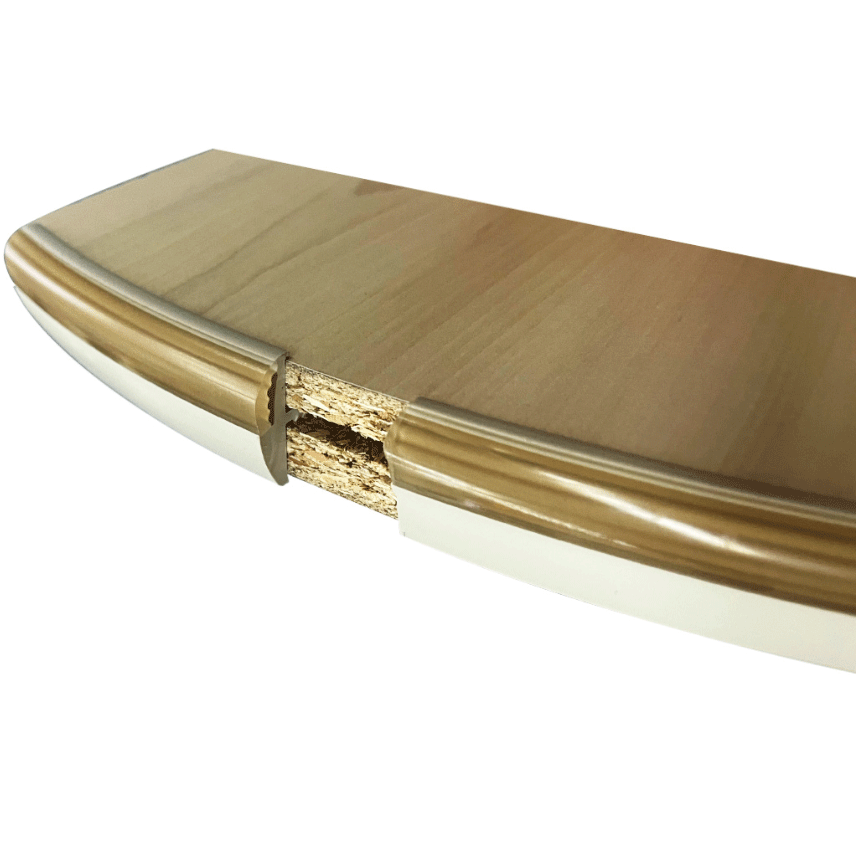
T-moulding relies on a “friction fit,” whereby the edgebanding's barbs secure firmly within the routed groove of the table or furniture. The physical property of a plastic's material memory—its ability to retain its original shape and stay in place—is a key factor that separates high-quality products from substandard ones. Commercial-grade T-moulding invests in more durable materials and advanced engineering to ensure long-lasting performance in demanding environments.
For many home improvement enthusiasts and budget-conscious customers, residential-grade plastic T-moulding offers an affordable and functional solution—at least in the short run. Ideal for light-use projects, it’s a popular choice for DIY furniture, home offices, or low-traffic rooms. This type of t molding edge banding provides a quick and cost-effective way to finish exposed panel edges with a professional look.
Thinner Gauges: Budget-friendlier and easier to install, but more prone to wear and tear.
Weak UV Stability: Prolonged exposure to sunlight often results in fading, warping, or cracking.
Higher Filler Content: To reduce costs, residential T-moulding sometimes includes higher concentrations of inexpensive fillers, leading to reduced flexibility and structural integrity.
A common issue with residential-grade T-moulding is its tendency to loosen over time. When subjected to regular stress—such as from edges being bumped or pulled—the barbs can lose their hold on the groove. This phenomenon, known as “peel,” is particularly prominent on corners where the moulding's grip is already compromised.
For high-traffic environments like hospitals, restaurants, schools, and airports, the demands on T-moulding are entirely different. The trim is expected to endure high-impact collisions, frequent cleaning with harsh chemicals, and long-term exposure to environmental pressures like sunlight, temperature fluctuations, and daily wear.
Shore Hardness and Durometer Ratings: Commercial-grade plastics like PVC are measured by their Shore durometer (a metric for hardness and durability). These materials are designed to resist impacts from chairs, carts, and heavy equipment without losing shape or chipping.
Barb Engineering: Unlike residential-grade moulding, commercial trims include barbs with advanced design features such as "micro-teeth" that provide better anchorage and friction within the groove.
Enhanced Flexibility: For tight-radii installations, the moulding must balance strength with the ability to bend without cracking.
To help procurement officers and contractors evaluate the costs of different grades, we’ve created a matrix summarizing their key attributes:
| Metric | Residential-Grade | Commercial-Grade |
| Impact Resistance | Low: Easily cracks or dents | High: Can withstand heavy impacts |
| UV Stability | Minimal: Fades and cracks with sunlight exposure | Superior: High UV-resistant formulation |
Chemical Resistance | Low: May discolor with cleaning agents | High: Resistant to industrial-grade cleaners |
| Installation Speed | Easier: Lighter, but looser grip | Moderate: Slightly more effort required for superior fit |
Although commercial-grade T-moulding costs more upfront, its extended lifespan, stronger performance, and reduced maintenance expenses contribute to a significantly higher ROI in high-traffic and heavy-use environments.
Choosing the right material for your T-moulding can drastically impact durability and aesthetics. Let’s dive into the two most common materials: PVC (Polyvinyl Chloride) and Polyethylene.
PVC is the industry standard for high-performance T-moulding due to its strength, flexibility, and resistance to wear. It also boasts excellent color-through technology, ensuring that scratches or marks don’t reveal unsightly white layers beneath the surface.
While not as tough as PVC, polyethylene is favored for its flexibility and resistance to moisture, making it ideal for certain niche applications like curved furniture or wet environments. However, it lacks the chemical and impact resistance of PVC.
RZABS has pioneered proprietary blends of PVC and other thermoplastics, achieving the perfect balance of rigidity and flexibility without sacrificing aesthetic appeal.
Even the highest-grade plastic T-moulding depends on proper installation for optimal longevity. Ensure that the groove width matches the trim's barb design, as small deviations (e.g., 1/16” vs. 3/32”) can make a significant difference in holding power.
For residential-grade moulding, a rubber mallet is often sufficient. However, commercial-grade T-moulding benefits from pneumatic hammers to evenly press the trim into high-grip grooves, reducing the chance of installation gaps.
When considering T-moulding for your project, ask yourself this: is it a space where the furniture and fixtures “live,” or do they “work”? Residential T-moulding may suffice for decorative, low-use settings, but commercial-grade versions are a must for high-traffic, long-term applications. The price difference is not an expense—it’s insurance against future repair costs, construction downtime, and frustration.